
In recent years, Somaliland has gained renewed international attention amid shifting geopolitical dynamics in the Horn of Africa. Though not internationally recognised as a sovereign state, Somaliland plays an increasingly important strategic role due to its location, political stability, and regional engagements.
Understanding Somaliland is crucial for analysing African geopolitics, maritime security, and great-power competition.
What Is Somaliland?
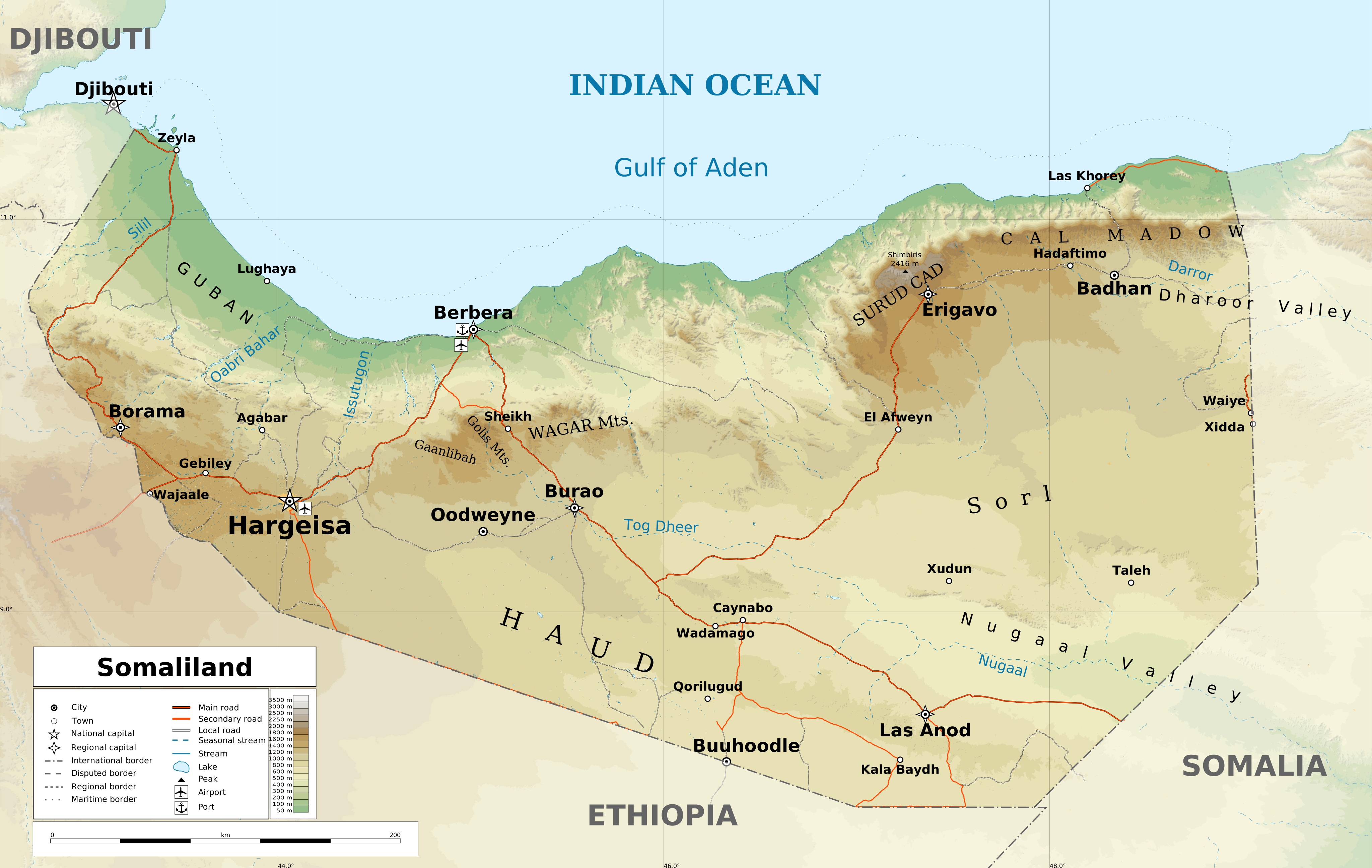
Somaliland is a self-declared independent region located in the north-western part of Somalia. It declared independence in 1991 following the collapse of the Somali central government.
Despite having:
-
Its own constitution
-
Elected government
-
Currency and security forces
Somaliland is not officially recognised by the United Nations or any country.
Key Facts About Somaliland
-
Capital: Hargeisa
-
Location: Horn of Africa, along the Gulf of Aden
-
Political Status: De facto state, de jure part of Somalia
-
Governance: Relatively stable democratic system
-
Security: More stable than southern Somalia
Somaliland has maintained peace and internal stability for over three decades, setting it apart from conflict-affected regions nearby.
Strategic Location and Maritime Importance
Somaliland lies along the Gulf of Aden, one of the world’s most critical maritime chokepoints connecting the Red Sea with the Indian Ocean.
Its proximity to:
-
Bab-el-Mandeb Strait
-
Major global shipping lanes
-
Energy trade routes
makes it strategically significant for:
-
Global commerce
-
Naval operations
-
Anti-piracy efforts
Ports like Berbera have emerged as valuable logistical hubs.
Regional and Geopolitical Significance
Somaliland’s relevance has grown due to:
-
Engagements with Gulf countries
-
Interest from global powers in port access
-
Regional realignments in the Horn of Africa
Recent developments involving Ethiopia’s search for sea access have further highlighted Somaliland’s strategic leverage.
For landlocked countries, Somaliland offers an alternative trade and transit corridor.
Why Somaliland Matters Globally
Somaliland is increasingly viewed as:
-
A stabilising force in a volatile region
-
A partner in counter-terrorism and maritime security
-
A potential logistics and trade hub
However, lack of recognition limits:
-
Access to international financial institutions
-
Formal diplomatic engagement
-
Large-scale foreign investment
This creates a complex dilemma between pragmatic engagement and respect for Somalia’s territorial integrity.
Concerns and Challenges
Despite stability, Somaliland faces challenges:
-
Non-recognition restricting development
-
Regional tensions
-
Risk of militarisation due to foreign interests
-
Diplomatic pressure from Somalia
Any move towards recognition could reshape regional politics significantly.
Relevance for UPSC & State PCS Aspirants
This topic is important for:
-
GS Paper II (International Relations)
-
Essay (Geopolitics & Regional Stability)
-
Interview discussions on Africa & maritime security
Key focus areas:
-
De facto vs de jure states
-
Strategic chokepoints
-
Horn of Africa geopolitics
Conclusion
Somaliland represents a unique case in international relations—a stable, functioning political entity without global recognition. Its strategic location along vital maritime routes ensures that it remains geopolitically relevant despite diplomatic constraints.
As competition intensifies in the Red Sea and Horn of Africa, Somaliland is likely to play an increasingly important—if complex—role in regional and global affairs.